

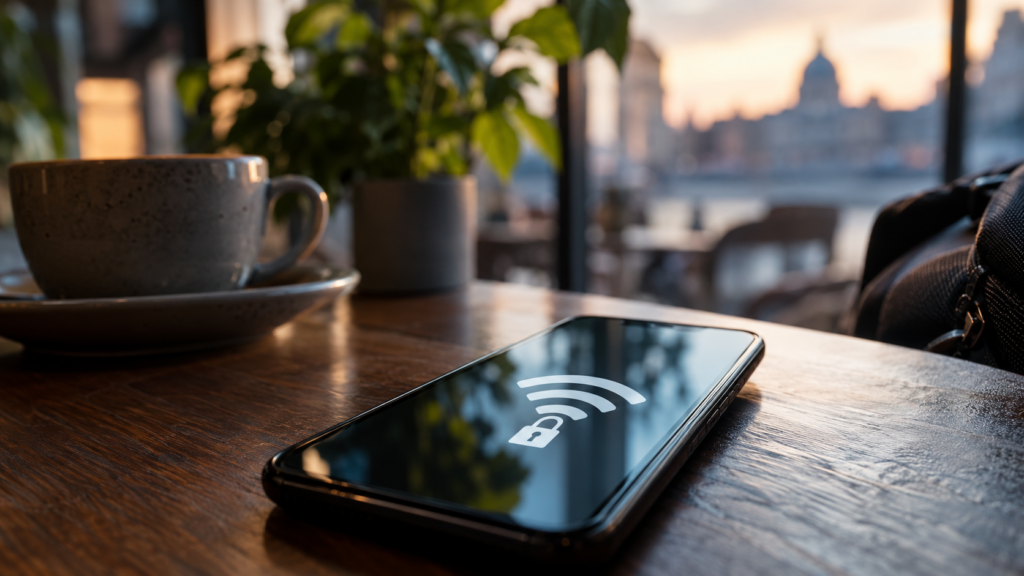
You sit down in a café, open your phone and see free Wi-Fi. Two taps later you’re online. We do it in hotels, airports, restaurants and shopping centres all the time. It feels almost identical to connecting at home, but there is one important difference: you don’t control the network.
A Wi-Fi network is basically the local bridge between your device and the internet. At home, that bridge belongs to you. On public Wi-Fi, somebody else manages it. That doesn’t automatically make it dangerous, but it does mean you’re trusting another network to carry your traffic before it reaches the wider internet.
Thankfully, most modern websites use encryption, which means the information travelling between your browser and the website is scrambled so other people cannot simply read it. When you see https in a website address, the connection is normally protected in this way. Think of it like sending a sealed envelope through a room full of people instead of passing around an open postcard.
The bigger problem is often knowing whether you’re connecting to the right network in the first place. A Wi-Fi name is just a name. Someone could create another network with a very similar one and hope people join it by mistake. That’s why I tend to check the exact network name when I’m somewhere unfamiliar, especially before doing anything involving work accounts, banking or personal information.
You may also meet a captive portal, which is simply the page that appears asking you to accept terms, enter a room number or type an email address before internet access starts. Hotels and airports use them constantly. They’re not unusual, but I still avoid entering information that clearly isn’t necessary just because a Wi-Fi login page asks for it.
I still use public Wi-Fi. It’s useful, and modern security has made everyday browsing much safer than it used to be. I just treat it like using somebody else’s computer network, because that’s basically what it is. Check the network name, keep your devices updated and think twice before handing over information you wouldn’t normally give away. Convenience is great. Knowing what you’re connecting to is better.